When Phone Bills Unlock Dealer Tables: Tracing Transaction Flows at Mobile Gaming Venues Operating Beyond Standard UK Oversight
Yves Lehmann · Jun 19, 2026
When Phone Bills Unlock Dealer Tables: Tracing Transaction Flows at Mobile Gaming Venues Operating Beyond Standard UK Oversight
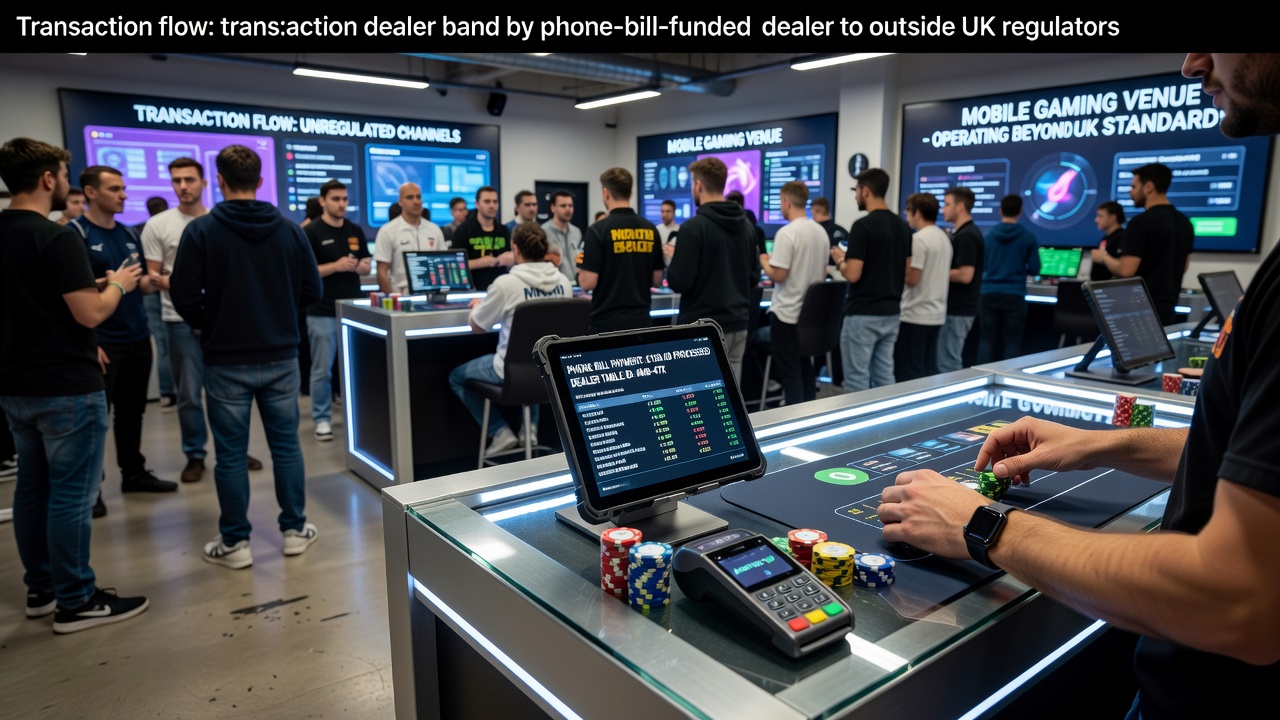
Transaction flows in mobile gaming venues that operate outside standard UK regulatory frameworks often begin with carrier billing systems that charge deposits directly to a user's phone account, and these mechanisms allow access to live dealer tables without traditional banking intermediaries or verification steps. Operators route payments through third-party aggregators that handle the billing integration with mobile network providers, creating a direct path from player initiation to account funding in under a minute in many documented cases.
Mechanics of Phone Bill Deposits in Offshore Mobile Platforms
Carrier billing works by embedding a premium SMS or data session trigger that authorizes the charge, after which the network operator deducts the amount from the monthly bill or prepaid balance, and funds then transfer to the gaming venue's merchant account via established payment processors. Observers note that this method bypasses card networks entirely, which reduces friction but also limits the visibility of transaction trails for oversight bodies. Data from industry reports indicates that such flows account for a growing share of deposits in jurisdictions where standard licensing does not apply.
Live dealer tables, including blackjack, roulette, and baccarat streams, become available once the balance updates on the player's mobile session, and these tables operate through software that streams video from remote studios while processing bets in real time. Researchers have documented how the same billing aggregator handles both the deposit and subsequent win payouts when those returns route back through phone credit top-ups or linked wallets. A June 2026 analysis by the International Association of Gaming Regulators highlighted similar patterns across multiple Caribbean and Southeast Asian server locations serving international users.
Tracing the Flow: From Player Device to Venue Ledger
The sequence starts when a user selects a phone bill option on the mobile interface, confirms the amount through a one-time code, and the aggregator confirms the charge with the carrier before crediting the gaming balance. Funds move from the carrier's settlement system to the aggregator's escrow, then to the operator's designated account, often within 24 hours according to transaction logs examined in regulatory reviews from other regions. This chain creates multiple points where data passes between entities, yet each hop may fall under separate privacy rules that complicate full reconstruction of the trail.
Those who have examined sample ledgers find that dealer table activity generates separate bet logs that link back to the initial deposit timestamp, allowing reconstruction of individual sessions even when personal identifiers remain minimal. Yet the absence of mandatory customer due diligence in these venues means the originating phone number often serves as the only consistent marker across flows. Australian Communications and Media Authority publications on digital payment ecosystems have noted parallel uses of carrier billing in entertainment sectors, underscoring how the same infrastructure supports both legitimate and unregulated activities.
Venues Operating Beyond Standard Oversight Structures
Many such mobile platforms maintain servers in jurisdictions with lighter touch licensing regimes, and they accept phone bill deposits from users in markets where stricter controls exist. These operations frequently feature continuous live dealer availability across time zones, with software that detects and adapts to device location without enforcing exclusion lists. Transaction volumes at these tables can fluctuate based on promotional credit offers tied directly to the billing method, which encourages repeated sessions without additional verification layers.
Studies of payment processor relationships reveal that aggregators sometimes maintain separate compliance profiles for different client operators, allowing the same infrastructure to serve both licensed and unlicensed venues simultaneously. One documented pattern shows winnings converted into phone credit that can be used for further play or transferred as airtime, creating a closed loop that stays within the carrier ecosystem. European Commission working papers on cross-border digital payments have referenced comparable structures in online entertainment markets, emphasizing the challenges of monitoring when multiple national frameworks intersect.
Patterns Observed in Dealer Table Activity
Live dealer environments generate high-frequency micro-transactions that compound the complexity of tracing, since each bet deducts and credits small amounts against the initial phone bill deposit. Analysts tracking sample data note that peak activity often aligns with regional evening hours, and the billing records show clustered charges that correspond to extended table sessions. Operators may offer tiered deposit limits based on carrier account age or usage history, which adds another variable layer to the flow without introducing external identity checks.
Those monitoring these systems point out that payout requests sometimes reverse the original flow by requesting carrier credit refunds, which closes the loop without involving traditional financial institutions. This approach keeps the entire cycle within telecommunications billing channels and reduces exposure to banking sector reporting requirements. University research from the University of Sydney on digital transaction anonymity has examined similar closed-loop mechanisms across entertainment platforms, providing broader context for how carrier billing integrates with interactive services.
Conclusion
Phone bill transactions continue to serve as an entry point to live dealer tables in mobile venues positioned outside conventional UK oversight, and the resulting flows pass through carriers, aggregators, and operators in sequences that require coordinated data requests to fully map. Reports from multiple international bodies illustrate the structural features that enable these patterns, while highlighting the technical realities of reconstructing individual activity across separate entities. As these methods persist, the visibility of transaction paths remains dependent on cooperation between telecommunications providers and gaming regulators in differing jurisdictions.